**"2026 Tata Punch EV Review: Premium Features at an Affordable Price"**
March 9, 2026
Share
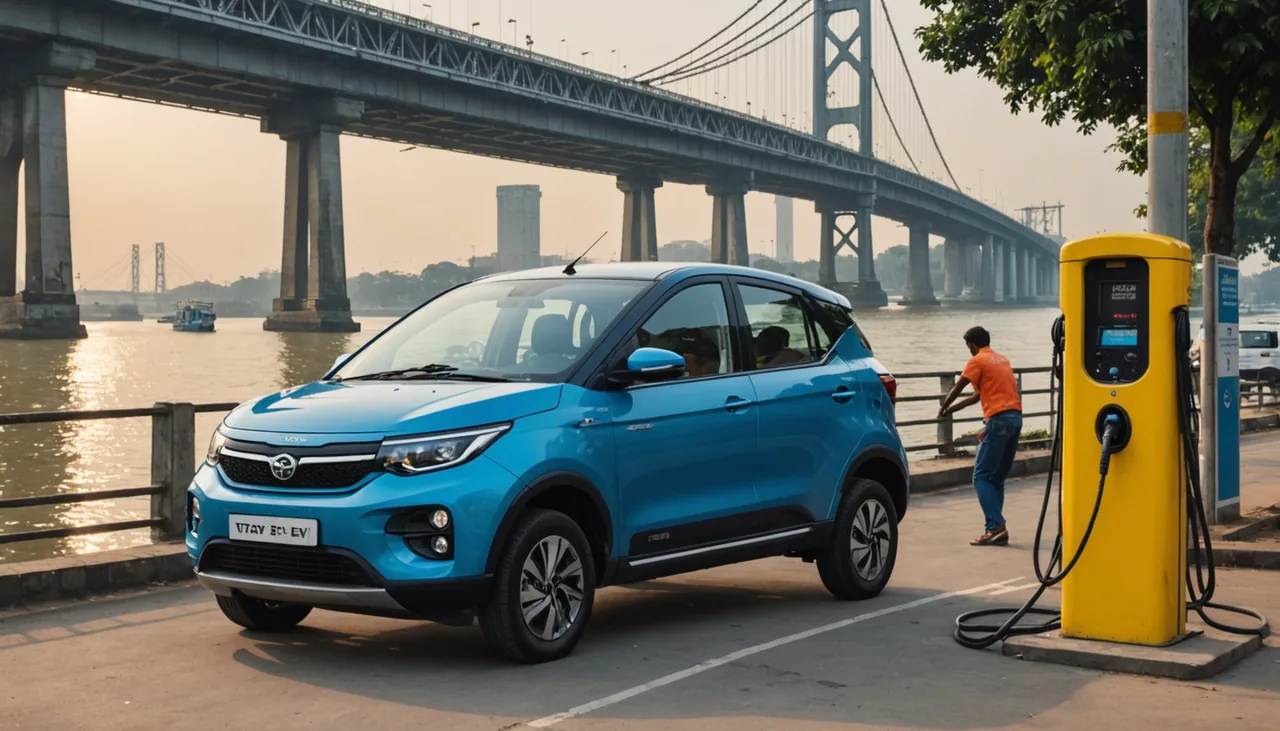
AI illustration
Cover image generated by AI to illustrate this story.
Key Takeaways
Tata Motors has updated the 2026 Punch EV with modern styling, improved efficiency, and a larger 40 kWh battery pack offering up to 468 km ARAI range and 355 km real-world range
The updated EV features a 10.25-inch touchscreen with wireless Android Auto and Apple CarPlay, improved cabin materials, and better panel gaps for a more refined interior
Performance improvements include a new powertrain delivering 130 PS and 154 Nm torque with a 0-100 km/h time of 9 seconds, plus DC fast charging at 65 kW for 10-80% charge in 30 minutes
The 2026 Punch EV starts at Rs 12.59 lakh with Battery-as-a-Service (BaaS) option available, making it a competitively priced entry-level EV with practical features and decent range
2026 Tata Punch EV Review: A Refreshed Entry-Level Electric Vehicle
The 2026 Tata Punch EV presents an intriguing evolution for an entry-level electric vehicle (EV). At first glance, the exterior changes may seem minimal, but a closer look at the specifications reveals significant enhancements under the hood by Tata Motors. Let's delve into the modifications, interior features, performance, and overall value proposition of this updated model.
Exterior Styling and Practicality
The 2026 Tata Punch EV introduces subtle yet modern styling updates. The front facade now features a more streamlined grille and compact lighting housings, moving away from the previous full-width light signature. The plastic trim has been lightened to a grey shade, lending the vehicle a more substantial and contemporary appearance.
On the sides, alterations are modest, with revised alloy wheels and vibrant new colour options that align with the car's youthful appeal. Despite the larger battery, the Punch EV retains impressive ground clearance of 195 mm and a robust 450 mm wading capacity, akin to a full-size SUV.
At the rear, the Punch EV sports a new full-width light cluster, previously seen in its internal combustion engine (ICE) counterpart, complemented by additional grey cladding and vertical design elements.
The frunk remains modest, ideal for storing a portable charging cable. However, with the integration of the motor, battery management modules, and other components into a more compact unit, there is unexpected free space that could have been utilized better.
The boot offers 366 liters of capacity with a high lip but sufficient depth to accommodate a couple of strollers and several soft bags. While the lip is somewhat high and lacks a 60:40 split, a notable drawback is the absence of a standard spare wheel.
Interior, Features, and Space
Stepping inside, the 2026 Tata Punch EV maintains a familiar layout, consistent with the previous Punch EV and the new Punch ICE. The cabin boasts a sturdy, rounded design with varied materials and textures. A prominent off-white central band with a recycled aesthetic and tri-arrow textures stands out, though more soft surfaces—especially on the door panels—would enhance the feel. The hard plastic doors are prone to scuffing, suggesting an upgrade in material quality would be beneficial.
Overall, the interior shows improved consistency, with tighter panel gaps and softened plastic edges, similar to the new ICE Punch.
The infotainment system features a reliable 10.25-inch touchscreen with crisp displays and intuitive menus, offering a suite of entertainment options and seamless wireless Android Auto and Apple CarPlay connectivity. Unlike the ICE Punch, the EV includes a matching 10.25-inch driver display, improved with better Google Maps projection and enhanced blind-view function, though larger fonts would be advantageous.
Practicality remains strong for its size, though the rotary gear selector exhibits a delay, as do the paddle shifters. The Punch EV resets to default regen settings upon each start, which may prove irritating over time. The climate control panel, consistent with other Tata EVs, features useful toggles but requires effort to navigate touch controls. The centre console is well-organized, offering a secure spot for a wireless charger, large cupholders, a small central armrest, and spacious door bins.
Subtle upgrades include a redesigned touchscreen bezel and more compact window switches that lend a modern touch, albeit with reduced intuitiveness. Leatherette upholstery with fabric inserts and ventilation, along with indicator stalks borrowed from the new Sierra, add to the comfort.
The Punch EV retains its 90-degree doors, facilitating easy ingress and egress, particularly at the rear, despite its compact dimensions. The completely flat floor enhances space efficiency. Passengers under 6 feet will find ample kneeroom and headroom, thanks in part to the absence of a full panoramic sunroof. However, taller or broader individuals may feel somewhat constricted. The dense cushioning on the backrest provides stable support, preventing fatigue on longer journeys.
A notable feature is the exceptional thigh support, nearly matching that of the ICE Punch. Tata Motors has extended the squab to compensate for the elevated floor, ensuring consistent support in this compact EV. The vehicle now includes a Type C charger but still lacks rear AC vents. Tata Motors claims improved cooling for both the battery pack and air conditioning.
Real-World Range, Battery, and Charging
The model reviewed sports a substantial 40 kWh battery, boasting an ARAI-certified range of 468 km. Tata suggests achievable real-world range up to 355 km. During testing under demanding conditions, the vehicle delivered an efficiency of 149 Wh/km or 6.7 km/kWh, translating to a range of approximately 270 km. Setting the car to City mode with level 2 regen proved effective for most driving scenarios.
DC fast charging has been enhanced to 65 kW, enabling a 10 to 80 percent charge in about 30 minutes. The shift from cylindrical to prismatic battery cells has facilitated increased capacity.
 AI illustration